About Kokura Weaving
資料提供 (一社)豊前小倉織研究会
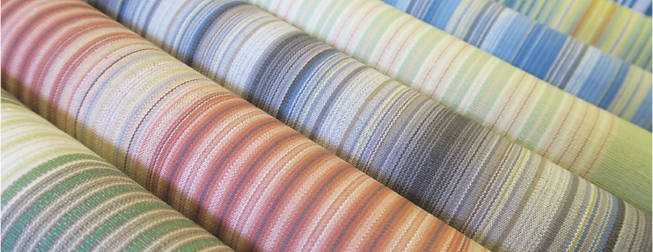
Kokura-ori is a cotton fabric that was actively woven in and around present-day Kitakyushu City from the beginning of the Edo period to the Taisho period. It is said that in ancient times, Tokugawa Ieyasu wore a Kokura-ori haori (jacket) when falconry, and that Hosokawa Tadaoki gave it as a gift to other daimyo (feudal lords). Because Kokura-ori is a strong fabric with a high density of warp threads, it was used for hakama (trousers), obi (sashes), and haori. Due to its durability, it was said that "a samurai's hakama must be from Kokura," and it was widely used throughout Japan. Kokura-ori was not only produced in Kokura but also in other regions, and its considerable popularity is evident from the many students and young people wearing Kokura hakama that appear in novels by famous Meiji-era writers. Although Kokura-ori was produced so vigorously, it almost disappeared and was forgotten by the beginning of the Showa period due to the changing times. However, in recent years, Kokura-ori has been revived by people who have rediscovered its beauty, and it is now being woven by many people, beginning a new chapter as a local culture.
Characteristics of Kokura weaving: Why is it so strong?
Feature ①
Two to four strands are twisted together to make thread.
Documents state that "the hakama were woven by twisting together two to four thin threads spun on a spinning wheel." However, the only surviving examples are those woven with two threads twisted together (double-ply yarn), and none have survived that were woven with more than two threads.


Feature ②

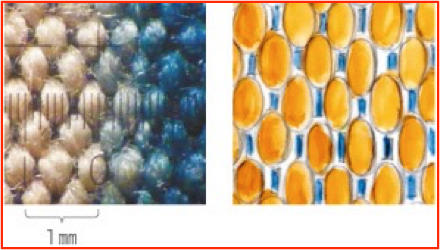
The warp threads are packed tightly together with no gaps, and the weft threads are barely visible. The warp thread density is 4 threads per millimeter and 40 threads per centimeter.

The weave is loose, so you can see through it. The warp and weft threads are equally visible.


The high density of the warp threads gives rise to the distinctive patterns. Because almost only the warp threads are visible, the colors used in the weft threads do not mix with them, allowing the warp colors to stand out clearly and the stripes to appear vivid. Furthermore, with the advent of chemical dyes, many striped patterns using multi-stage gradations were created by dyeing with many different colors.


Many young people practicing swordsmanship at dojos and children attending terakoya (private schools) wore hakama (traditional Japanese trousers) made of Kokura-ori fabric. Furthermore, students wearing haori (jackets) and hakama made of Kokura-ori fabric frequently appear in novels by literary giants from the Meiji to Taisho periods.

① Growing cotton

② Spinning the yarn


③ Dye

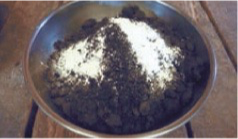
Indigo dyeing uses sukumo, which is made by fermenting the indigo plant, as the dye. The process of fermenting sukumo with the help of microorganisms is called inai-date (indigo dyeing). Only after inai-date can the fabric be dyed indigo blue.



④ Weave


Finished
